A business in Business Bay may lease a client-facing office on one floor and a support team space above it. A clinic may split reception and administration across separate suites. Connecting the rooms with ordinary WiFi can be unreliable, while ordering a second internet circuit may not solve the need to share local systems securely.
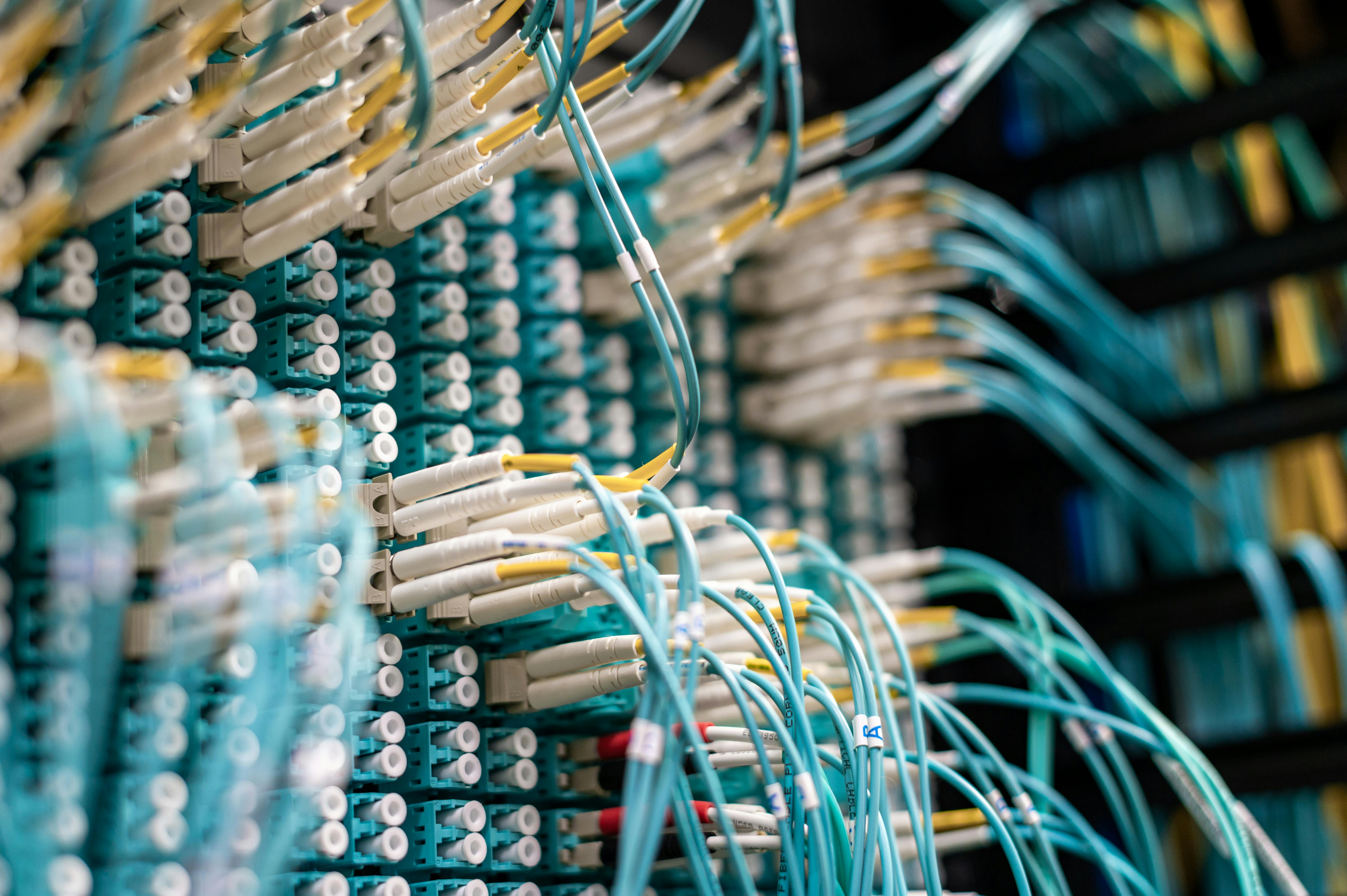
A private fibre backbone is one option to connect network equipment between those spaces. Before a cable is pulled, be clear about the goal: connect two LANs, extend a network, carry voice and data, or provide a separate carrier handoff. These designs have different security and service implications.
Carrier fibre versus your own building link
A carrier fibre circuit is part of the provider's service delivery. It connects a provider network to a designated customer handoff, subject to address availability, an order, and the provider's acceptance process. A private inter-office link is a cable and network connection controlled by your organization between two endpoints that you define.
The two can use similar cable, but they are not interchangeable. A du-labelled outlet does not automatically become a private link for your business, and an inter-floor cable does not automatically provide internet. If you need both a carrier service and a link between offices, plan both scopes and identify where the provider handoff enters the network.
What to decide before asking for a quote
- Endpoints: identify the rack, cabinet, or network panel at each office.
- Purpose: state which users, applications, and network segments need to communicate.
- Capacity: ask the network designer to specify expected throughput and future headroom.
- Equipment: confirm switch ports, fibre interfaces, optics, and compatibility at both ends.
- Route: inspect the telecom room, risers, trays, sleeves, and access points.
- Approvals: confirm permits, access times, contractor rules, and building handover requirements.
Do not choose fibre type or optics from a generic online list. The correct interface depends on the devices, distance, route, and design. The installer can execute the agreed physical scope, but the network equipment and segmentation should be specified for the organization's needs.
Plan the route between floors
A route between suites on one floor may use a different pathway from a link that passes through several floors. Building management may control riser access and require approved contractors, permits, protection, and work windows. Ask for the latest pathway drawing if one is available, but have the actual route checked; building records may not show every obstruction or previous cable.
Confirm where the cable will enter and leave the riser, where slack can be stored, how it will be labeled, and how penetrations will be treated under building rules. A cable should not be left hanging in a telecom room or mixed with other services without identification. Agree testing and handover before work starts.
Keep the office networks secure
A physical connection does not mean every device should share one unrestricted network. If the spaces have different teams, guest access, CCTV, voice, or sensitive systems, ask the network administrator how traffic should be segmented and controlled. VLANs and firewall policies can limit which systems communicate across the link.
Also decide what happens if the inter-office link is down. Can each site keep working locally? Which services depend on the other floor? A network diagram and a simple failure plan help staff understand whether a problem is local, on the backbone, or with the internet provider.
How SAS IT Services can deliver the fibre work
SAS IT Services can survey the approved route and undertake agreed cable pulling, splicing, termination, labeling, testing, and handover in Dubai. We are an authorized Etisalat partner for agreed Etisalat installation work and also provide third-party installation on du-related customer projects without claiming du authorization or affiliation. Building approval and carrier activation remain with the relevant parties.
Our fibre cable pulling and splicing service covers physical route work; our network services can help with the LAN design and segmentation around the link. For new racks and office infrastructure, see IT infrastructure setup or the SAS IT Services homepage.
Frequently asked questions
Is an inter-office fibre link the same as Etisalat fibre internet?
No. A carrier circuit provides an internet or telecom service, while a private inter-office fibre link connects network equipment between your own spaces. They have different owners, endpoints, approvals, and commissioning steps, even if both use fibre cable.
Can fibre connect offices on different floors in the same Dubai building?
It can be a suitable design, subject to distance, pathway availability, network equipment, building permissions, and the required capacity. A survey should confirm the endpoints and approved route through risers or trays before cable work is scheduled.
Can I use a building riser for a private office fibre link?
Only if building management approves that route and the work complies with property rules. A riser is shared infrastructure and may require permits, an approved contractor, access windows, and specific fire-stopping or labeling requirements.
What equipment is needed at each end of the fibre?
The required switches, fibre interfaces, optics, or media conversion depend on the network design, fibre type, distance, and device compatibility. Have the network designer specify both ends before ordering cable or optics.
Does SAS install inter-floor fibre in Dubai offices?
SAS can survey and undertake agreed fibre pulling, splicing, termination, labeling, and testing work, subject to building and project approvals. WhatsApp +971 58 539 7453 with both office locations and the building details to discuss a route assessment.
A carrier line brings a service to your building; a private backbone connects your own network endpoints.
Planning a link between floors? WhatsApp SAS at +971 58 539 7453 with the two endpoint locations and building contact.
Related reading: plan office fibre before the fit-out ceiling closes and repair or reinstall an existing fibre route.