The UAE's 5G network now covers all seven Emirates, according to the TDRA's 2025 rollout report. Your mobile gets excellent signal in the car park. Then you walk into your office building — through the glass lobby, past the concrete partitions, into the meeting room at the far end — and the WiFi drops to two bars and video calls stutter. The 5G coverage is fine. Your internal wireless network is where the performance dies.
This is the most common IT conversation we have with new Dubai business clients in 2026. With DMCC reporting record membership and a wave of post-Ramadan commercial fitouts underway across Business Bay, JLT, and Dubai Silicon Oasis, hundreds of new offices are being set up right now — and most are making the same WiFi mistake: choosing the wrong brand for their scale, or placing one router in the corner and calling it done.
Here is the honest comparison of the four brands that matter, the sizing rules that govern real deployments, and the grey-market warning that applies to UAE network hardware just as it does to CCTV cameras.
- Ubiquiti UniFi — best for Dubai SMEs (up to ~80 users). Excellent performance, strong value, simple cloud management.
- Aruba (HPE) — best for mid to large offices needing enterprise management and vendor-backed SLA support.
- Ruckus — best for dense or difficult environments: hotels, conference centres, multi-floor offices with heavy concrete walls.
- Cisco (Meraki/Catalyst) — best for enterprise, multi-site, or compliance-driven environments where Cisco's ecosystem is already in use.
Why Your Dubai Office WiFi Is Not Just About the Brand
Before the brand question, there is a more fundamental question that most Dubai IT quotes skip entirely: how many access points do you actually need, and where should they go?
Dubai's office environments have specific characteristics that affect WiFi planning. Reinforced concrete walls — standard in most Business Bay, DIFC, and JLT commercial towers — absorb 2.4 GHz and 5 GHz signals heavily. A single access point in an open-plan office of 300 square metres may give you full signal sitting at your desk, and two bars in the enclosed meeting room at the other end. Add a second AP in that meeting room and both spaces work properly.
The rule we use: plan for one ceiling-mounted access point per 20–25 active devices, with additional APs for enclosed rooms that are used for video conferencing. A 30-person office with two meeting rooms typically needs 3 to 4 APs positioned strategically — not one ISP-supplied router in the server room.
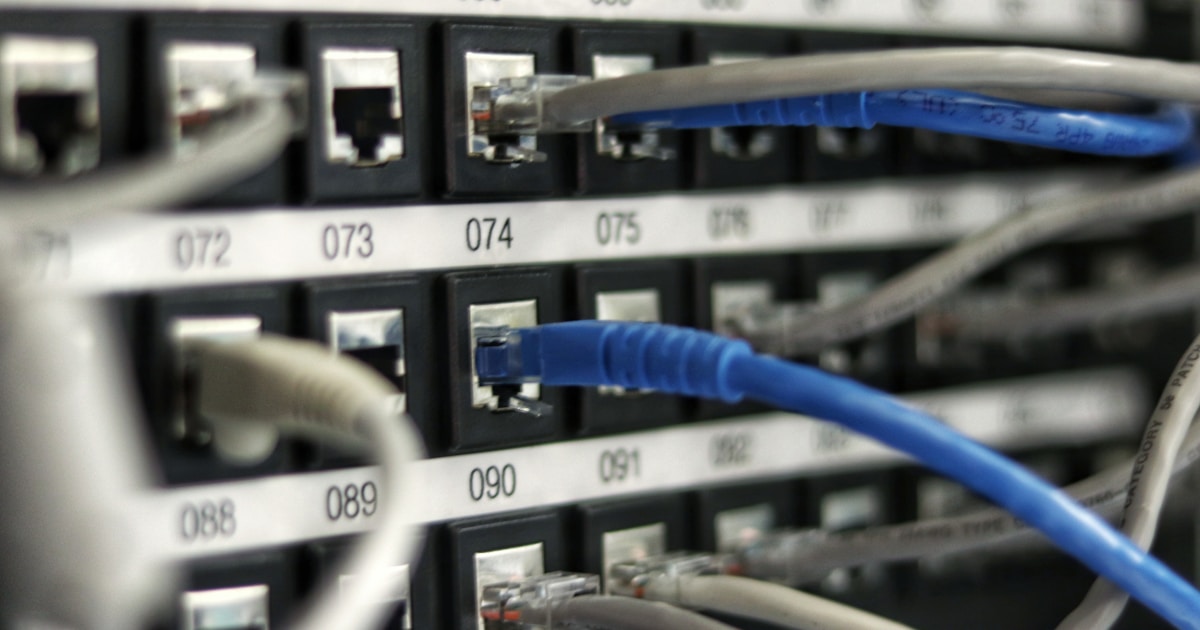
PoE (Power over Ethernet) is the correct installation method for all professional APs. It means the network cable carries both data and power to the AP — no mains socket required at the ceiling. This is only possible with a PoE switch at the cabinet, which means your switch selection matters as much as your AP selection. Our network infrastructure service covers the full stack: switch, cabling, AP placement, and configuration.
The Four Brands Compared
Ubiquiti UniFi
Ubiquiti is the most popular professional WiFi platform among Dubai IT teams for SME deployments — and for good reason. The UniFi line covers everything from the entry-level U6 Lite to the high-density U6 Enterprise, all managed through a single free cloud controller. Setup is straightforward, the interface is clean, and the platform supports everything a professional office needs: multiple SSIDs, VLAN segmentation, guest portal, traffic monitoring, and detailed client analytics.
For a Dubai office of 10 to 80 users, Ubiquiti delivers enterprise-level functionality at a significantly lower price point than Cisco or Aruba. It does not have the vendor-backed support contracts that enterprise buyers require, but for an SME with a competent IT partner, this is rarely a practical limitation.
Aruba (HPE)
Aruba is Hewlett Packard Enterprise's networking brand and the preferred choice for mid to large Dubai offices that need enterprise management features and a vendor-backed support SLA. Aruba Central's cloud management is more powerful than Ubiquiti's for complex policy environments — deep RADIUS, 802.1X authentication, AI-based RF optimisation, and tight integration with Aruba's switching and SD-WAN products.
The trade-off is cost: Aruba access points are two to three times the price of equivalent Ubiquiti hardware, and Aruba's licensing model adds ongoing annual fees. For a business that needs guaranteed response times from the manufacturer, multi-site management at scale, or integration with procurement standards, the premium is justified. For a 20-person Business Bay office, it is usually more than is needed.
Ruckus
Ruckus is the specialist choice for technically challenging environments. Their BeamFlex+ antenna technology — which dynamically adapts the antenna pattern toward connected devices rather than broadcasting omnidirectionally — delivers materially better penetration through the thick concrete and glass-heavy constructions common in Dubai commercial towers, hotels, and conference venues. If you have a multi-floor deployment, a hotel with hundreds of simultaneous guests, or a conference room setup where 60 people are all on WiFi simultaneously, Ruckus performs where other brands struggle.
For a standard open-plan office with 20–30 users, Ruckus's advantage over Ubiquiti or Aruba in a well-designed installation is not significant enough to justify the price difference. It becomes the right choice specifically when the environment is genuinely difficult.
Cisco (Meraki / Catalyst)
Cisco remains the name that enterprise IT directors recognise and specify. Cisco Meraki is their cloud-managed product line — excellent dashboard, deep visibility, and tight integration with Cisco's security and switching products. Catalyst WiFi is their on-premises enterprise line for organisations that require full local control.
The honest position: for most Dubai SMEs, Cisco is more than is needed, and its pricing reflects enterprise procurement assumptions. For a Dubai business with an existing Cisco infrastructure investment, a DIFC financial firm with compliance requirements, or a multi-site organisation running 50+ locations, Cisco's ecosystem and support infrastructure makes sense. For a new 25-person office in JLT choosing their first proper WiFi system, Ubiquiti or Aruba delivers comparable wireless performance at a fraction of the cost.
Brand Comparison Table: Cisco vs Aruba vs Ruckus vs Ubiquiti for Dubai
| Brand | Best For | Not Ideal For | UAE Suitability | Typical AED Range (per AP, installed) |
|---|---|---|---|---|
| Ubiquiti UniFi | SMEs, professional offices up to ~80 users, multi-AP home setups | Complex enterprise with advanced policy needs | Very good — widely used by UAE IT teams, strong community, cloud-managed | AED 600 – 1,800 |
| Aruba (HPE) | Mid-large offices, managed service environments, vendor SLA required | Very small offices (cost overkill) | Excellent — HPE has regional support presence, Aruba Central is UAE-hosted | AED 1,500 – 4,000 |
| Ruckus | Hotels, dense environments, conference venues, thick-wall buildings | Simple small offices (performance advantage not needed) | Excellent — BeamFlex handles Dubai concrete construction exceptionally | AED 1,800 – 4,500 |
| Cisco (Meraki/Catalyst) | Enterprise, multi-site, compliance environments, existing Cisco stack | SMEs without complex policy needs (cost not justified) | Excellent — Cisco has UAE office and regional TAC support | AED 2,500 – 6,000 |
AP Sizing Guide — How Many Access Points Does Your Dubai Office Need?
| Office Scenario | Recommended Brand | APs Needed | Key Notes |
|---|---|---|---|
| Home / apartment (Dubai villa or flat) | Ubiquiti or TP-Link | 1 – 3 | Ceiling-mounted APs eliminate dead zones; concrete walls require more APs than open-plan |
| Small office (up to 15 users) | Ubiquiti | 1 – 2 | 1 AP for open plan, 2 if office has enclosed meeting room or reception |
| Medium office (15 – 50 users) | Ubiquiti or Aruba | 3 – 6 | PoE switch required; plan dedicated APs for conference rooms used for video calls |
| Large office / enterprise (50+ users) | Aruba or Cisco Meraki | 8+ | RF survey recommended; VLAN planning for staff / guest / IoT separation |
| Hotel / hospitality (Dubai or UAE) | Ruckus | Per-floor deployment | BeamFlex performance in dense guest environments is measurably better at this scale |
| Warehouse / industrial (Al Quoz, DIP, Sharjah) | Ubiquiti or Aruba outdoor | 2 – 8 | Outdoor-rated APs required for extreme heat; mount at height for maximum coverage area |
The Grey-Market Warning for Dubai Network Hardware
The grey-market hardware problem that affects CCTV cameras in Dubai applies equally to network equipment. Ubiquiti, Cisco, and Aruba hardware sourced outside authorised UAE distribution channels may be genuine manufacturer hardware — but with non-UAE firmware versions, no local warranty, and in some cases hardware designed for different power standards or radio frequency bands. Radio frequency allocations differ between regions; a device certified for EU or US operation may transmit on channels that are not licensed in the UAE, creating both legal and performance issues.
How to protect yourself: Always request a UAE warranty certificate from your supplier. Verify Cisco hardware through Cisco's serial number checker. Purchase Ubiquiti through authorised UAE resellers only. SAS IT Services sources all network hardware through verified local distribution channels — every device we install carries a valid UAE warranty.
What SAS Recommends — Multi-Brand, Site-First
We install and manage Ubiquiti, Aruba, Ruckus, and Cisco across Dubai. Every recommendation starts with a site visit — we walk the office, measure the space, assess the wall construction, review the number of concurrent users and their usage patterns, and check what cabling already exists. Only then do we recommend a brand, a model, and an AP count.
In the majority of Dubai SME fitouts we handle in 2026 — offices of 10 to 50 users in Business Bay, DMCC, JLT, and Dubai Internet City — the answer is Ubiquiti. It is the right tool for that scale. For larger, more complex environments, or clients who need vendor-backed SLA support, we move to Aruba. For specific high-density venues, Ruckus. For enterprise Cisco environments, Cisco.
Our business network service covers the full scope: wireless survey, PoE switch sizing, structured cabling, AP installation, VLAN configuration, guest portal setup, and handover documentation. If your current office WiFi fails during busy periods, drops calls in meeting rooms, or has never been designed by someone who actually measured your space — WhatsApp us at +971 58 539 7453 and we will assess it for free.
Frequently Asked Questions
How many access points do I need for a 30-person Dubai office?
Plan for 2 to 4 ceiling-mounted APs depending on floor area, wall construction, and room layout. The conservative baseline is one AP per 20–25 active devices. A 30-person office where people each have a laptop and a phone (60 devices) typically needs 3 APs in open plan and 4 if enclosed meeting rooms are used for regular video calls. Dubai's concrete partitions reduce coverage range — what works in a European open-plan building may not be sufficient here.
Is Ubiquiti enterprise-grade enough for a serious Dubai business?
Yes, for most Dubai SMEs. Ubiquiti's UniFi U6 Pro and U6 Enterprise handle 30–50 concurrent users per AP, support VLAN segmentation, guest portals, and cloud management. For businesses up to approximately 80 users without complex policy requirements, Ubiquiti is entirely appropriate and significantly more cost-effective than Cisco or Aruba. The gap that matters is vendor-backed support SLAs — if your business requires a guaranteed manufacturer response time, move to Aruba.
Do I need a controller server or can I manage WiFi from the cloud?
All four brands now support cloud-based management without a physical on-site controller. For most Dubai SMEs in 2026, cloud management is the standard approach — you can view network status, push firmware updates, and troubleshoot remotely, including from outside the UAE. A physical controller is still used in some enterprise deployments for latency-sensitive or compliance-driven environments, but it is no longer the default requirement.
What is the difference between a home WiFi router and a proper office access point?
A home router is designed for 5–15 devices in a residential space. A professional access point is designed for 30–100+ simultaneous devices, supports multiple SSIDs and VLANs, enables seamless roaming between APs, and draws power through the network cable via PoE — no ceiling socket required. In a Dubai office with more than five people, a consumer router is the wrong tool and will degrade noticeably under load from a full team.
Can I upgrade my Dubai office WiFi without recabling the entire office?
In most cases, yes. If your office already has Cat5e or Cat6 cabling to ceiling drop points, new APs connect to the existing cable — provided the PoE switch is upgraded to match the new APs' power draw. Recabling is required only when there are no cable runs to the desired AP positions, or when existing cable is Cat5 (which limits throughput for WiFi 6 hardware). A site survey confirms what is reusable. WhatsApp us at +971 58 539 7453 for a free assessment before you buy anything.